

How Often Should You Rotate
the Tires on a Used Car?
When you invest in a quality used car, protecting its value and performance becomes a top priority. One of the most effective yet often overlooked maintenance tasks is regular tire rotation. But how often should you rotate the tires on a used car? The general recommendation is every 5,000 to 7,500 miles, but this can vary based on the vehicle's drivetrain, your driving habits, and the condition of the tires when you purchased it. For a pre-owned vehicle, establishing a consistent maintenance schedule is key to longevity. Regular rotations help promote even tread wear across all four tires, which extends their lifespan, improves handling, and contributes to a safer, more stable ride. By staying on top of this simple service, you not only save money on premature tire replacement but also enhance your vehicle's overall performance on the road. Our team can help you create a schedule that fits your specific car's needs.
Failing to rotate the tires on your used vehicle can lead to a host of preventable issues. Uneven tread wear is the primary consequence, which significantly reduces the life of your tires and can negatively impact fuel efficiency. More importantly, it can compromise your vehicle's handling and traction, especially in adverse weather conditions. This can lead to decreased stability and longer stopping distances. To keep your vehicle running safely and efficiently, visiting a professional for routine maintenance is essential. You can easily schedule your next tire rotation with our expert technicians.
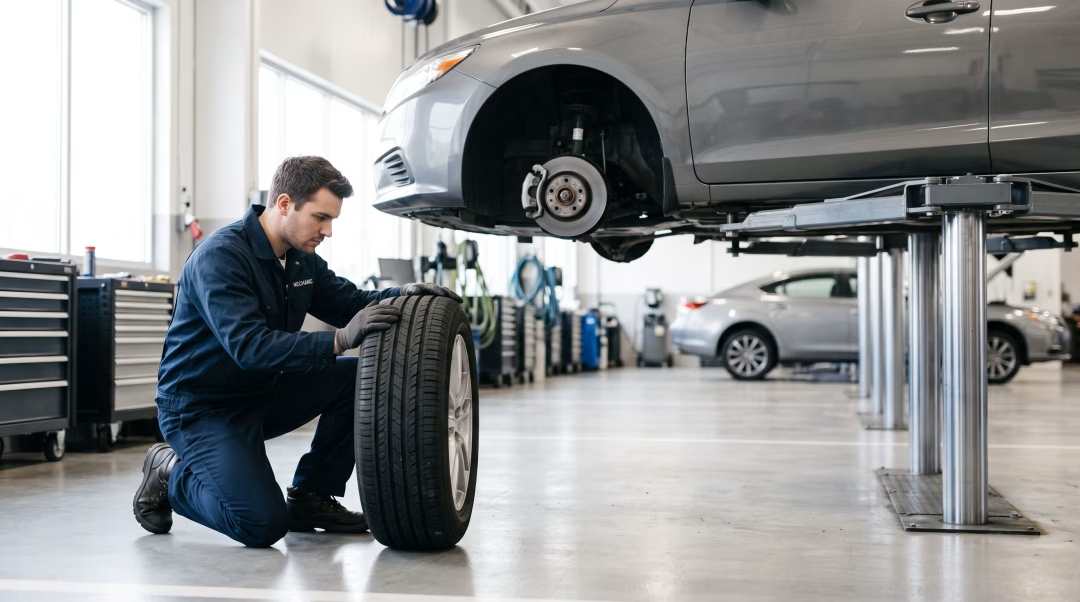
The Comprehensive Guide to Used Car Tire Rotation
Understanding the "why" behind vehicle maintenance can empower you as a car owner, especially when it comes to a pre-owned vehicle with its own unique history. Tire rotation is a cornerstone of smart preventive car maintenance. At its core, tire rotation is the process of moving each tire and wheel to a different position on the vehicle to ensure they wear down evenly over time. Your front tires, for example, carry more of the vehicle's weight and handle the bulk of the steering and braking forces, causing them to wear faster than the rear tires. By systematically changing their positions, you distribute this wear more evenly, maximizing the life of your entire set.
Why Drivetrain Dictates the Rotation Pattern
The optimal pattern for rotating your tires depends entirely on your vehicle's drivetrain—whether it's front-wheel drive (FWD), rear-wheel drive (RWD), all-wheel drive (AWD), or four-wheel drive (4WD). Each system places different demands on the tires, necessitating a specific rotation pattern to achieve balanced wear.
- Front-Wheel Drive (FWD): On FWD vehicles, like many popular used sedans and crossovers, the front tires do the work of both steering and pulling the car. This results in much faster wear on the front axle. The most common pattern is the forward cross. The front tires are moved straight back to the rear, while the rear tires are moved to the opposite sides of the front axle (e.g., right rear to left front).
- Rear-Wheel Drive (RWD): For RWD cars and many used trucks, the pattern is reversed. The rear tires, which propel the vehicle, are moved straight to the front. The front tires are then moved to the opposite sides of the rear axle. This is known as the rearward cross pattern.
- All-Wheel Drive (AWD) & Four-Wheel Drive (4WD): These systems are sensitive to differences in tire diameter. Even small variations caused by uneven wear can strain the drivetrain. Therefore, frequent rotation is critical for used AWD SUVs and 4x4 trucks. The recommended pattern is typically the X-pattern, where all tires are moved to the diagonally opposite position (e.g., right front to left rear).
It is also important to note if your vehicle has directional tires, which are designed to rotate in only one direction. In this case, the tires can only be moved from the front to the back on the same side of the vehicle.
Special Considerations for a Pre-Owned Vehicle
When you purchase a car from our used inventory, one of the first things to consider is its maintenance history. If the previous owner's tire rotation schedule is unknown, it is wise to have them inspected and rotated shortly after your purchase. Our technicians at our used car service center can assess the current tread depth and wear patterns on all four tires. This initial checkup establishes a baseline, allowing us to recommend a personalized rotation schedule to correct any existing uneven wear and ensure your tires last as long as possible.
Signs That Your Tires Are Due for a Rotation
While sticking to a mileage-based schedule is ideal, your vehicle may also give you physical clues that it is time for a rotation. Being attentive to these signs can help you prevent excessive wear and potential safety issues.
- Uneven Tread Wear: The most obvious sign. Visually inspect your tires. If you notice the tread on your front tires is significantly lower than on your rear tires, a rotation is overdue.
- Vehicle Vibration: If you feel a noticeable vibration, particularly at speeds over 45 mph, it could be a sign of uneven tire wear. While this can also indicate a need for tire balancing, the two often go hand-in-hand.
- Pressure Loss: If one tire consistently loses pressure faster than the others, it might be bearing an unequal load. A rotation can help redistribute the weight more evenly.
Pairing Rotation with Balancing and Alignment
To get the most out of your tires and your vehicle's suspension, tire rotation should be performed in conjunction with other key services. Tire balancing ensures that the weight of the tire and wheel assembly is evenly distributed, preventing vibrations and premature wear. A wheel alignment adjusts the angles of your wheels to the manufacturer's specifications, ensuring your vehicle travels straight and your tires make proper contact with the road. Having these services performed together during a single visit is an efficient way to care for your vehicle's handling and safety systems.
Is tire rotation really necessary for my used car?
Yes, absolutely. Regular tire rotation is one of the most important maintenance tasks for extending the life of your tires. It promotes even tread wear, which improves vehicle handling, maintains traction for better safety, and can even contribute to better fuel economy. For a used car, it is especially important to establish a good maintenance routine early on.
Can I rotate my own tires?
While it is possible to rotate your own tires if you have the proper tools, including a car jack, jack stands, and a lug wrench, we recommend having it done professionally. Our technicians have the equipment to lift the vehicle safely and can also perform a tire balance and inspect your brakes and suspension at the same time.
Does my car's drivetrain affect the tire rotation schedule?
While the general mileage interval of 5,000-7,500 miles applies to most vehicles, the drivetrain (FWD, RWD, AWD) primarily affects the *pattern* of the rotation, not necessarily the frequency. However, because uneven wear can cause damage to AWD systems, owners of those vehicles should be particularly diligent about sticking to a regular schedule.
What is the difference between tire rotation and wheel alignment?
Tire rotation involves physically moving your tires to different positions on the car to even out wear. A wheel alignment is an adjustment of the vehicle's suspension components to ensure the wheels are angled correctly relative to the road and each other. A proper alignment prevents the car from pulling to one side and stops uneven tire wear from starting.
How long does a professional tire rotation service take?
A standard tire rotation is a quick service. Typically, it can be completed by our skilled technicians in under an hour. If you are also having the tires balanced, it may take a little longer. It's a small investment of time that provides significant benefits for the life of your tires and the safety of your vehicle.
